The Little Train Depot That Refused to Leave Town
By Culpeper HQ ·
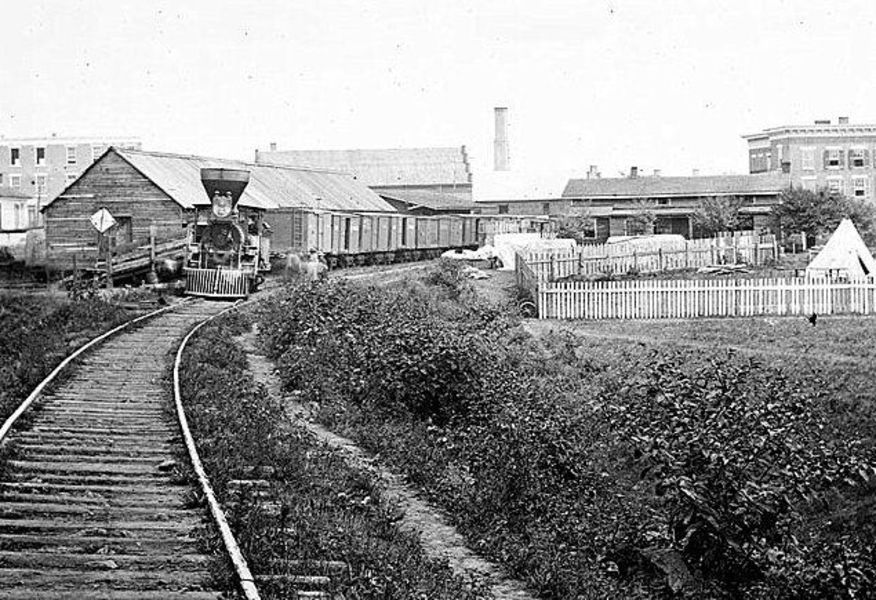
There are buildings you pass so often they become scenery.
The courthouse. The storefronts. The old brick walls. The church steeples. The corner you use as a landmark without ever thinking about why it became a landmark in the first place.
Culpeper’s train depot is one of those places.
It sits near the edge of downtown, familiar and steady, the kind of building you may notice only when a train comes through or when someone from out of town asks where the Visitor Center is.
But the depot is not just a convenient stop or a pretty old building.
It is one of Culpeper’s great survivors.
The first Culpeper station came along with the railroad age, when the Orange and Alexandria Railroad helped connect this part of Virginia to a wider, louder, faster-moving world. Railroads changed towns. They moved people, crops, goods, newspapers, mail, soldiers, visitors, and all the little rumors that make a town feel alive.
Culpeper was no exception.
By the late 1800s, the depot was part of the town’s daily rhythm. People arrived there. People left from there. Freight moved through there. News came through there. The depot was not just a building near the tracks. It was a front door.
Then, as old buildings sometimes do in old towns, the earlier depot met fire.
The station that had been built in the 1870s burned in 1903. A year later, in 1904, the current depot was completed to replace it.
That detail matters.
The depot we know today was born as a replacement, which feels fitting. It is a building whose story keeps returning to the same theme: something is nearly lost, and then something else rises in its place.
For decades, the depot served Culpeper while trains and towns both changed around it.
The age of rail travel gave way to the age of highways. Downtowns across America lost some of their gravity as shopping, work, and travel patterns moved outward. Buildings that once felt essential became, in the eyes of accountants and distant decision-makers, old, inefficient, or simply in the way.
By the 1980s, Culpeper’s depot had seen better days.
In 1985, Norfolk Southern sought permission to demolish part of the building. To some people, that might have sounded practical. Old building. Declining use. Expensive repairs. Clear the problem and move along.
But Culpeper did not move along.
A local committee formed to save and restore the depot. That is the part of the story worth pausing over, because preservation does not happen by accident. Buildings do not save themselves. People save them.
Somebody has to notice before it is too late.
Somebody has to say, “Wait a minute.”
Somebody has to believe that an old depot is not just a maintenance problem, but a piece of local memory with a roof over it.
That is what happened here.
The restoration effort took years, patience, funding, paperwork, persistence, and probably more meetings than anyone involved would care to remember. But the work paid off. The depot was restored, reopened to the public, and eventually became part of the daily life of modern Culpeper in a new way.
Today, the building serves locals and visitors alike. It is home to tourism and visitor services, and the Museum of Culpeper History operates from the historic depot space as well. Passenger trains still stop nearby, which gives the whole thing a pleasing continuity. The depot is not just preserved behind velvet rope. It is still part of the town’s movement.
That may be the best outcome for an old building.
Not frozen.
Not forgotten.
Still useful.
There is something very Culpeper about that.
The depot stands at the edge of downtown like a reminder that towns are built in layers. The railroad layer. The courthouse layer. The Civil War layer. The farm-town layer. The Main Street layer. The commuter layer. The newcomer layer. The “I remember when” layer. The “we just moved here, where should we eat?” layer.
All of it overlaps.
And when a building like the depot survives, it gives those layers a place to gather.
That is one reason it felt right for Culpeper HQ’s first local story.
Before we start introducing you to the people of Culpeper, before we start pointing you toward events and dinner tables and tucked-away places, it seemed right to begin with a building that has spent more than a century watching people come and go.
The train depot has been a doorway, a witness, a workplace, a target for demolition, a preservation project, and now, once again, a public place.
That is a pretty good resume for a little brick building by the tracks.
And it is a reminder of one of the simplest truths about local life:
The things that make a town special are often hiding in plain sight.
You just have to stop walking past them long enough to look.