Fifty Years Later, a Culpeper Veteran Went Back to Vietnam
By Culpeper HQ ·
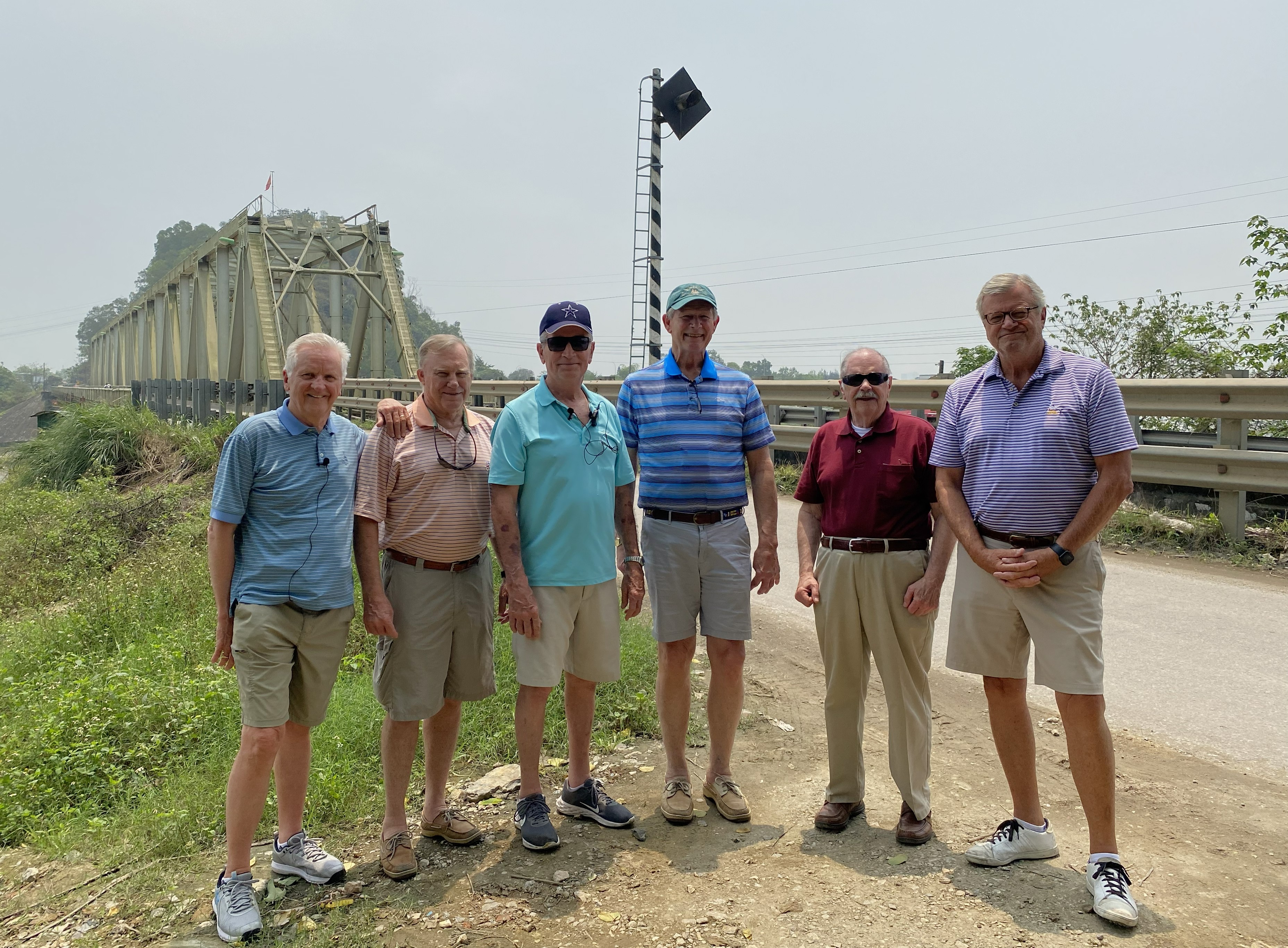
The most revealing part of Paul Hvidding’s return to Vietnam came on foot.
The Thanh Hoa Bridge had been a strategic target that Paul’s squadron bombed. Fifty years later, Paul and the other aviators stood beside the restored bridge and saw the remains of anti-aircraft positions on a nearby hill.
“To walk across the restored bridge to witness how substantial it is was a revelation,” he said. “I now understand how the North Vietnamese shot down 104 aircraft trying to destroy the bridge. It was a formidable target.”
That change in perspective was common during their 16-day journey and in *Return of the Intruders*, the documentary Paul helped create after coming home to Culpeper.
## The Culpeper Handshake
Paul and his wife, Beverly, moved to Clairmont Manor four years ago, less than a mile from their daughter Jane and her family. They had retired in 2013 and built a home on six acres in Stanardsville, but maintaining the property became more demanding. For Beverly, who grew up in Culpeper, the move was also a return home.
Paul was born in Portland, Oregon, served in the Navy and moved every two or three years during a career with Exxon, Mobil, and the National Rural Electric Cooperative Association, of which REC is a member. In all, he has lived in 10 states. He jokes about “the Culpeper Handshake”-the way longtime residents compare histories until they find a connection.
“Between my service in the Navy and moving every 2-3 years with Exxon and Mobil, I don’t have roots like that,” he said.
An ordinary Saturday might include family, a University of Virginia game or preparation for his work as a deacon at Culpeper Baptist Church. Paul also edits photos and video, a hobby that became important when Navy memories turned into a new mission.
## The Second Seat
Growing up in a poor family of 10 children, Paul said he had few examples to help him imagine his future. A Naval ROTC scholarship took him to the University of Virginia, where a roommate whose father was a Navy pilot helped plant the idea of flying.
The Navy sent Paul to Texas for aviation orientation before his junior year. He flew in a T-34 trainer and an F-9 fighter jet, got airsick, and decided flying still sounded like fun. His eyesight kept him from becoming a pilot, so he became a Naval Flight Officer instead-the second crew member in an A-6 Intruder.
Paul served as a bombardier/navigator, or B/N, a job he calls “the best job that any NFO would want.” He flew 80 A-6A missions against targets in Vietnam, navigating, operating the targeting system, preparing armament settings and watching for anti-aircraft fire and missiles.
During night missions, flown below 500 feet, Paul worked with his face against a hood covering the radar and handled the “switchology” by touch. His pilot never flew into the ground, Paul said, though “I had to yell at him once.”
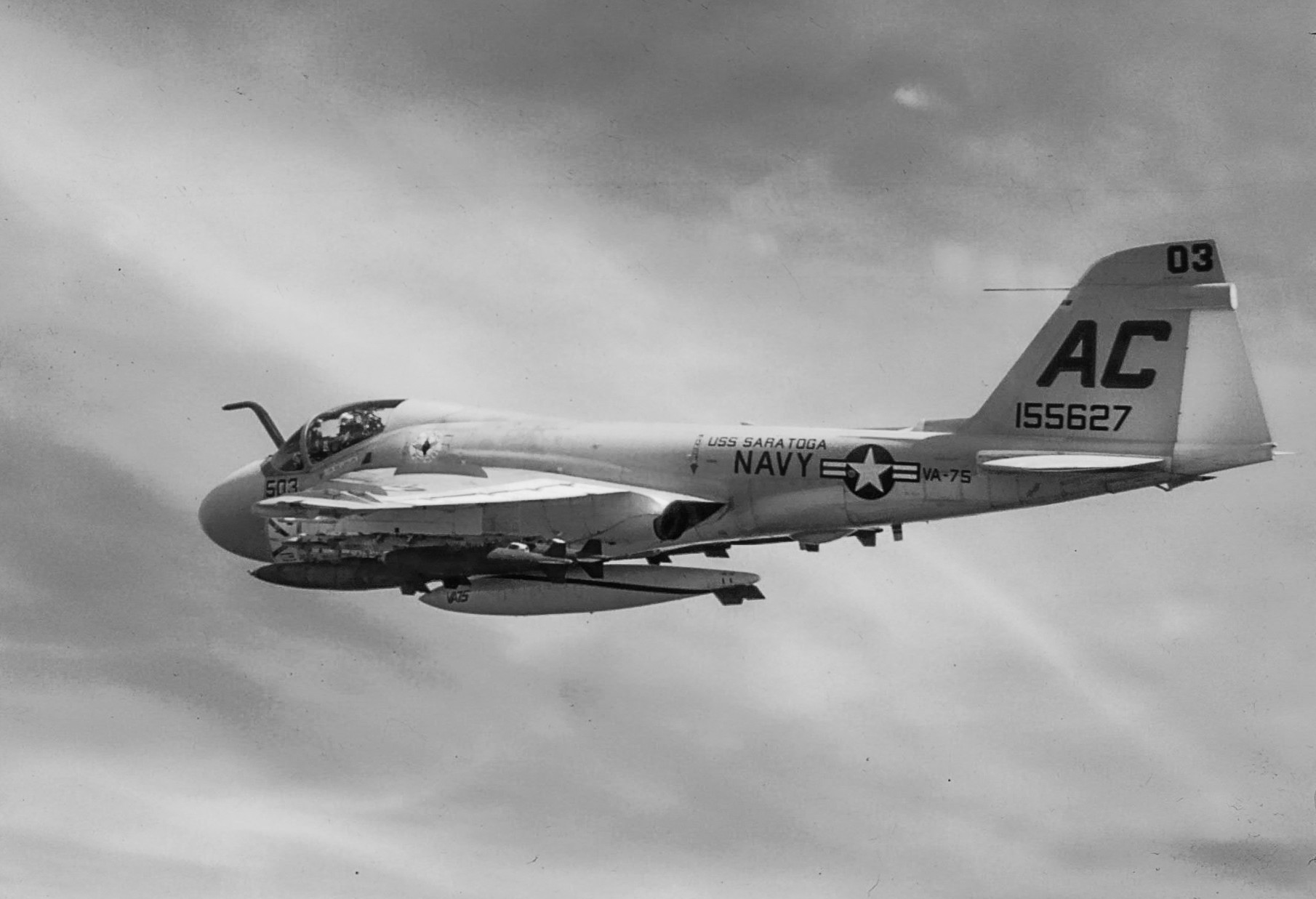
*A Navy A-6 Intruder from VA-75, the Sunday Punchers. Photo: Photographer not identified; courtesy of Paul Hvidding.*
The missions stayed with him, but so did the people. He remembers men from different backgrounds who trusted one another, and the deaths of four senior leaders: Charlie Earnest, Don Lindland, Bob Graustein and Bart Wade.
“We 25-year-olds had to suck it up and take on more difficult missions, knowing how each mission might be our last,” he said.
The consequences reached home. His daughter Jennifer was 3 months old when he left for Vietnam and more than a year old when he returned. “It took her a while to get used to me.”
Culpeper HQ uncovered one local thread: Paul served in VA-75 with Derrel “Buck” Perry, an uncle of Culpeper HQ founder Tim Suggs. Paul remembers Buck as a respected ordnanceman whose team made every mission possible. Years later, Buck sent Paul a framed poem, *Memorial Day. Every Day*, that Paul has kept for his children and grandchildren.
## Six Aviators, Six Wives
The idea of returning to Vietnam came from Paul’s former pilot, Ken Pyle, who suggested holding a squadron reunion there. Paul responded as a B/N might: he took responsibility for planning.
He contacted a custom-tour company and suggested stops connected to the group’s most challenging wartime missions. About 15 aviators expressed interest. By late 2022, health and the demands of the itinerary had narrowed the group to six former “Sunday Punchers” and their wives.
The route covered about 500 miles by bus over 16 days. Before departure, Paul’s primary feeling was curiosity. Would people be hostile? Would the wives mutiny halfway through an exhausting schedule? He also felt responsible for the group and for recording enough of the trip to support a documentary.
In Hanoi, the country’s industriousness and bustle were immediately apparent to Paul. At Thanh Hoa, the restored bridge and anti-aircraft artillery positions offered a ground-level view of a place the veterans had known only from the air.
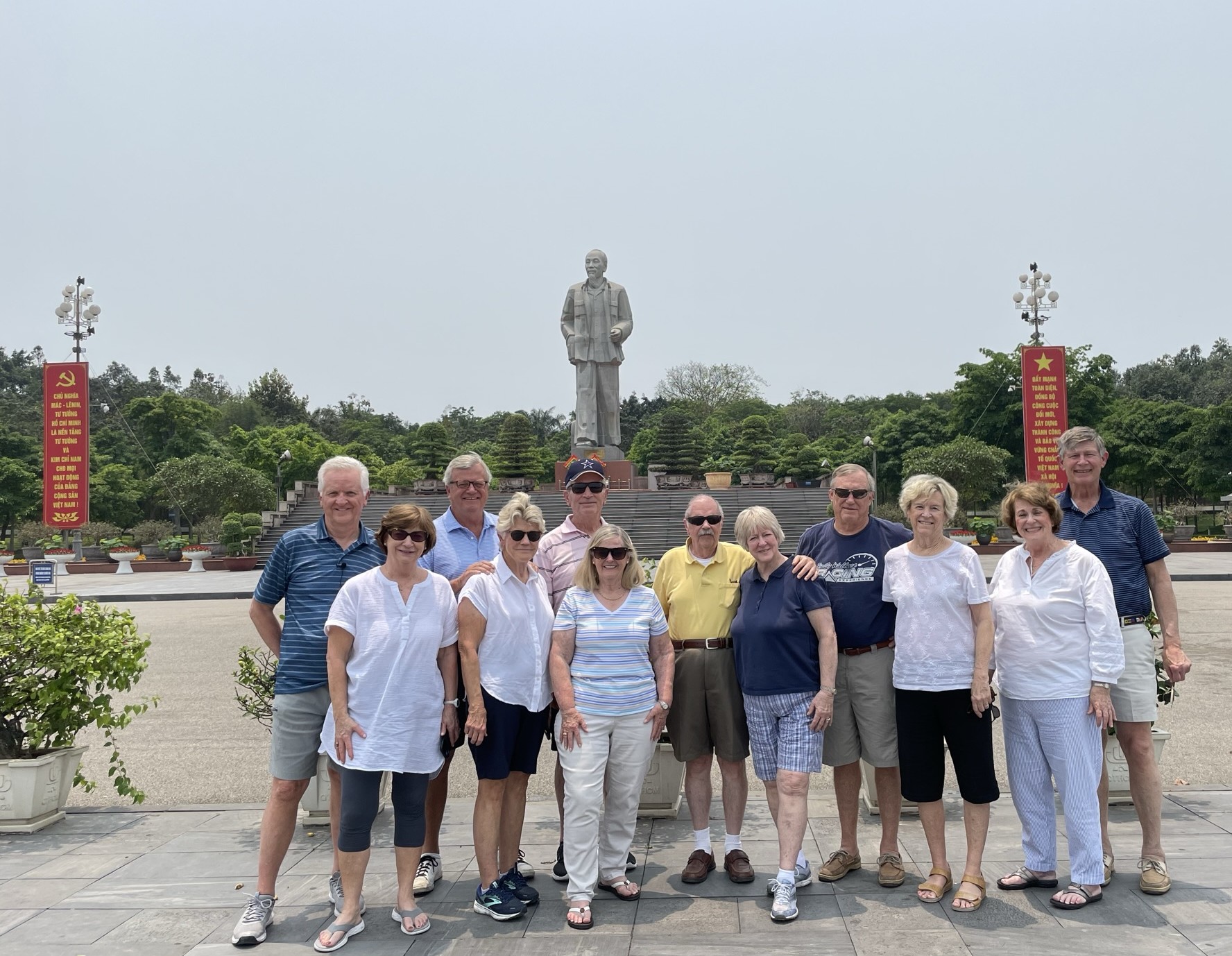
*Six former “Sunday Punchers” and their wives during their return to Vietnam. Photo: Photograph by Tour Guide “Tang”; courtesy of Paul Hvidding.*
Another encounter supplied the journey’s clearest expression of reconciliation. A guide at the former POW prison ‘Hanoi Hilton’ had served in a surface-to-air missile battalion. When the veterans described how they had defended themselves against SAMs, the guide answered, “You shoot at me, I shoot at you, but we’re all here now!”
The group also met with personnel working to recover VA-75 Commander Charlie Earnest’s remains from the Gulf of Tonkin. At a lake where part of a B-52 remains visible, they honored lost mentors and friends. The trip allowed Paul to read Buck’s poem again “with greater peace and wisdom” than 30 years earlier.
## Making *Return of the Intruders*
The trip became a film before the group ever boarded a plane. Paul had invited Carol Reardon, the historian who wrote *Launch the Intruders* about VA-75’s service in 1972 and 1973, to join them. She declined, but encouraged him to make a film for the historical record and for the veterans’ families.
Paul contacted the University of Virginia’s Media Studies Department looking for a volunteer. Matt Nolan responded within a day and began work in January 2023, recording hours of interviews with all 12 travelers.
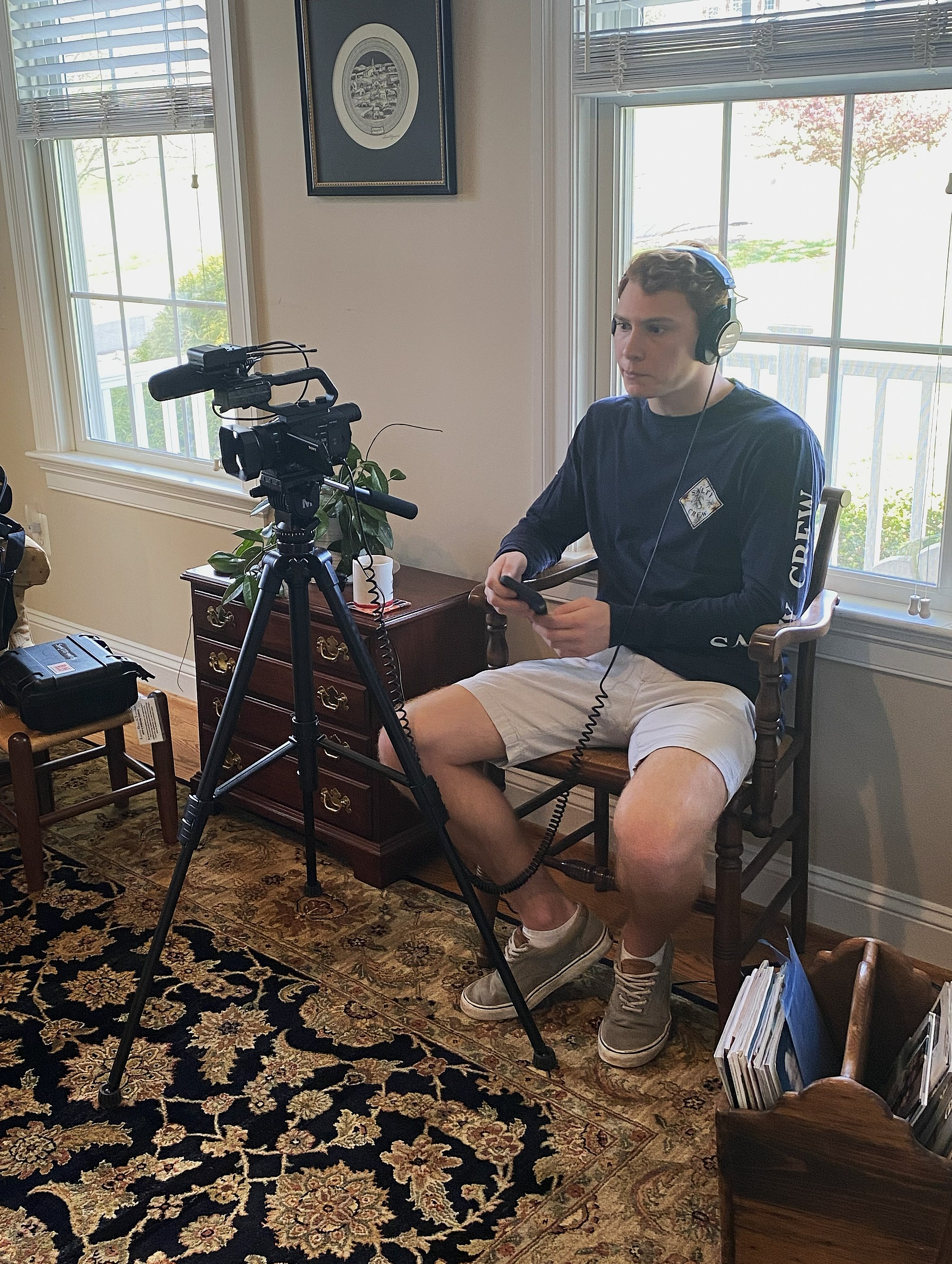
*Matt Nolan records a pre-trip interview before the group’s return to Vietnam. Photo: Photograph by Paul Hvidding.*
As the project got underway, Paul accepted the role of co-creator with Matt. He recorded more than a terabyte of GoPro video, supplied archival Super 8 combat footage, reviewed scripts, gathered feedback and raised money. Nolan made the film on a budget of $6,200.
“It was a labor of love,” Paul said.
Beverly, who married Paul years after his Navy service, experienced the squadron’s relationships more fully during the journey. The trip showed her the “band of brothers” they had become and the ease with which they reconnected after decades apart.
Paul first imagined a film for a narrow circle. Audience responses convinced him it had broader historical value. The team is working with the Naval Aviation Museum and the National Museum of the Marine Corps on events that would preserve it.
## What Remains After War
*Return of the Intruders* is scheduled to premiere in Culpeper on November 13. Paul hopes the audience sees more than aircraft carrier warfare, military history, and modern Vietnam.
“It is ultimately not a film about war, but about the aftermath of war,” he said. “It’s about the bonds forged in service, the families who shared the sacrifice, and what can happen when former enemies meet again as people rather than adversaries.”
That idea follows Paul back to Culpeper, where people search for common ground through hometowns, schools, and other life experiences. In Vietnam, common ground came through a bridge, a former adversary’s plainspoken observation, and a band of brothers swapping war stories.
Fifty years did not erase what happened. Paul’s account does not ask it to. What the years offered was another vantage point, one from which old friends could honor those who were missing, look at former enemies as people and more fully understand the places they once aimed to destroy.
As this story came together, we got to know this story through our conversation with Paul Hvidding[1]; that showed us where to look beyond the headline.
“If audiences leave believing that friendship can endure, old wounds can heal, and understanding can grow where war once divided us,” Paul said, “then the film will have accomplished what we hoped it would.”